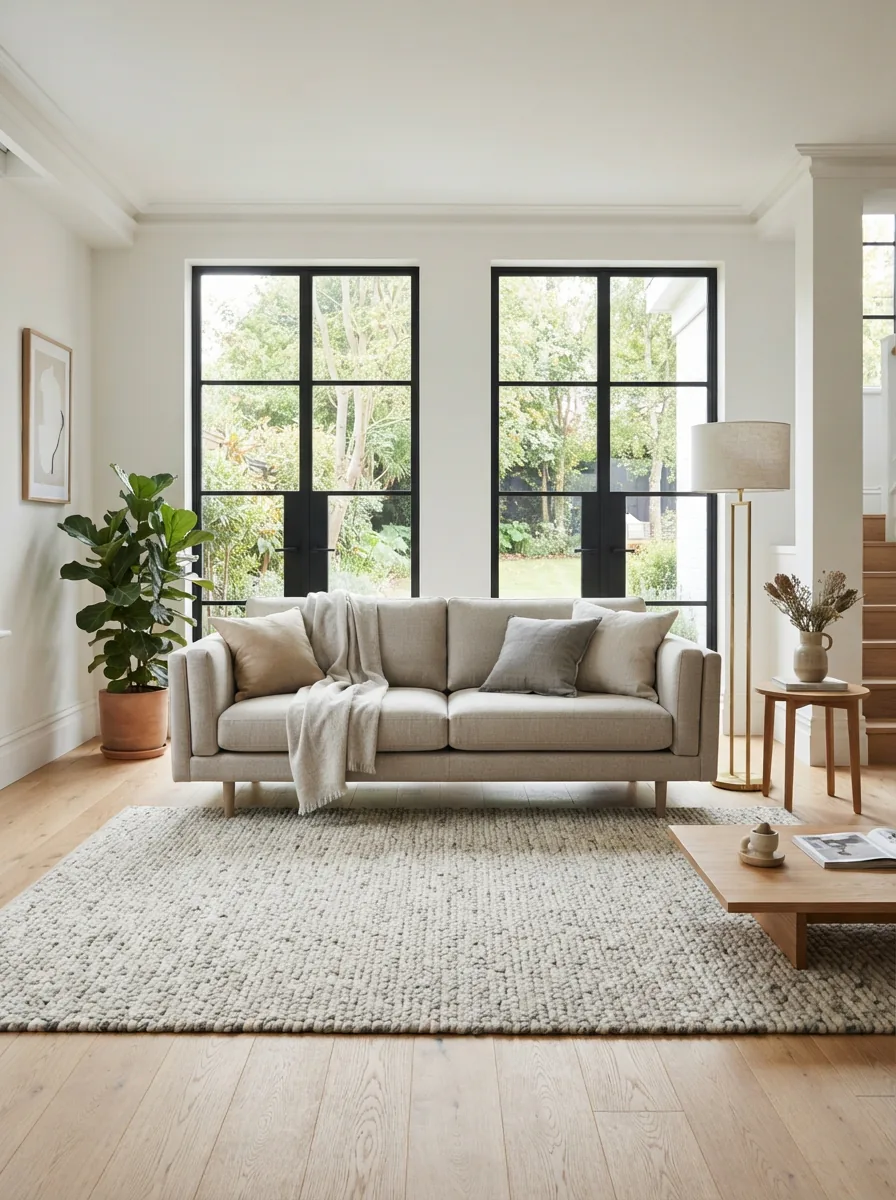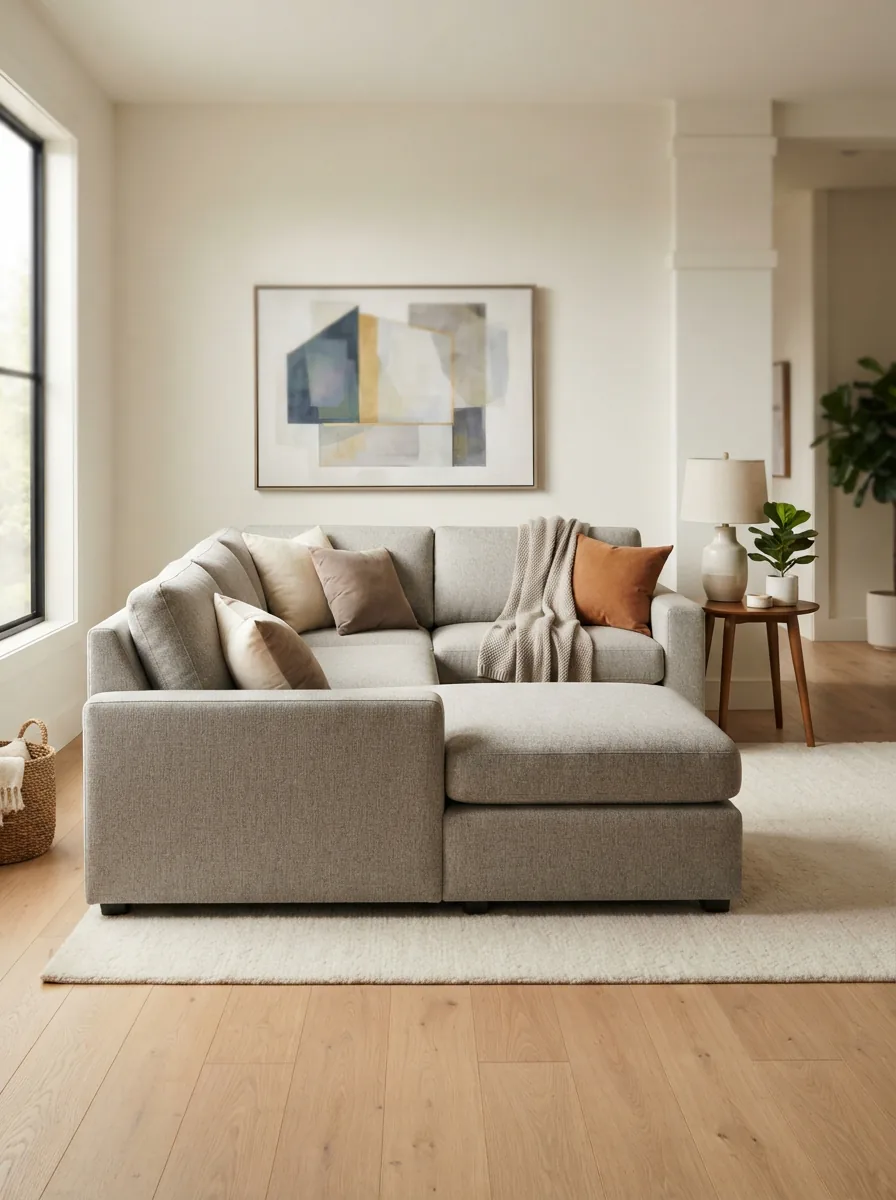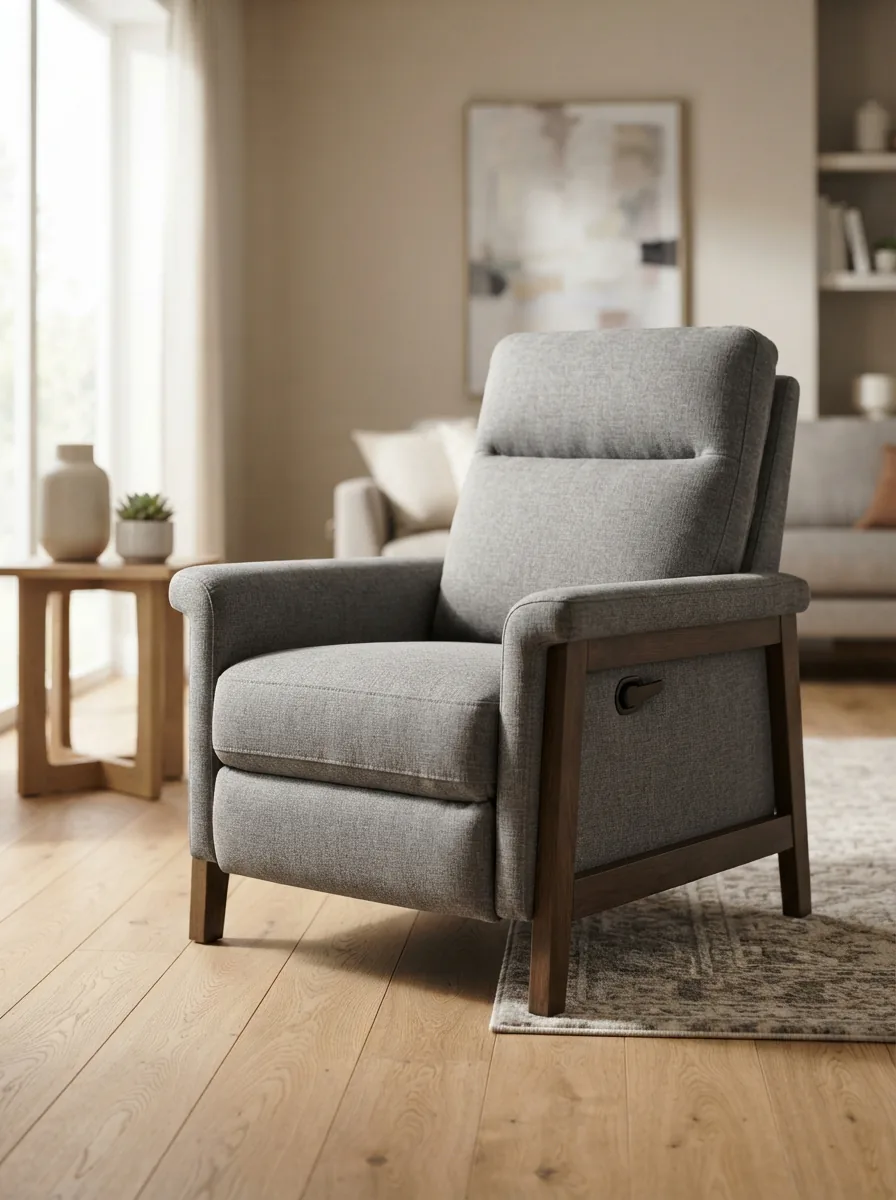


Something significant is happening in interior design, and it is wearing white. The minimalist white fabric sofa has quietly become the defining piece of a broader cultural shift — one that prizes restraint, intentionality, and a kind of lived-in serenity over maximalist expressions of stuff. If your algorithmic feed has recently surfaced cream-colored living rooms, boucle textures, and clean-lined silhouettes draped in warm afternoon light, you are already sensing it. This is not a passing moment. This is the drop of the decade. Driven by the enduring influence of Scandinavian-inspired interiors, the mainstreaming of wellness culture, and a collective desire to slow down and breathe inside our own homes, the minimalist white sofa has graduated from design-world insider favorite to a mainstream must-have that crosses demographics, budgets, and aesthetics with rare ease. Designers and tastemakers alike are treating it as a collaboration between form and feeling — a piece that holds space for living without shouting about itself. The sofa is no longer just furniture. It is a statement about how you choose to exist in your home.
The Five Most Popular Minimalist White Fabric Sofas Right Now
The following picks represent the cream of the crop — each one balancing clean design aesthetics, thoughtful construction, and real-world usability at different price points. Whether you are outfitting a sun-drenched studio or anchoring a spacious open-plan lounge, there is a sofa in this lineup that belongs in your space.
1. IKEA KIVIK Sofa — Tallmyra White/Black

Rating: ★★★★☆ 4.2/5 | 452 reviews
Price Range: $999
The KIVIK is IKEA’s most reviewed white sofa for a reason. With its deep, generously cushioned seat and broad, welcoming silhouette, it threads the needle between casual comfort and clean modern form beautifully. The Tallmyra white/black cover has a subtle woven texture that reads as effortlessly understated — perfectly tuned for a Scandinavian minimalist aesthetic or a more contemporary transitional interior. Its low profile keeps the room feeling open and uninterrupted, and the removable, washable covers — a signature IKEA feature — make long-term maintenance genuinely painless rather than anxiety-inducing. For those who want the cultural credibility of Nordic design without the Nordic price tag, the KIVIK delivers on every level.
Best For: Open-plan living rooms, first apartments, and design-savvy buyers who understand that accessibility and good taste are not mutually exclusive.
2. IKEA HYLTARP Sofa — Hallarp White

Rating: ★★★★☆ 4.2/5 | 102 reviews
Price Range: $1,149
Where the KIVIK leans casually welcoming, the HYLTARP leans structured and precise. Its tighter, more tailored silhouette and defined track arms give it a sophisticated edge that feels particularly at home in contemporary or transitional interiors designed to impress as much as to comfort. The Hallarp white upholstery has a crisp, almost gallery-like quality — it is the sofa that makes a room feel curated rather than accumulated. Reviewers consistently praise its firmness and supportive seat depth, making it a reliable long-term investment for those who prioritize posture and endurance alongside aesthetics. The HYLTARP is the kind of piece that design-forward collaborators — interior stylists, boutique hotel operators, content creators building aspirational backdrops — choose when they want clean geometry that photographs beautifully and performs even better in everyday life.
Best For: Living rooms that double as content creation spaces, formal sitting rooms, and interiors where visual precision is part of the brief.
3. IKEA UPPLAND Sofa — Blekinge White

Rating: ★★★½☆ 3.7/5 | 183 reviews
Price Range: $899
The UPPLAND occupies a fascinating intersection: extra-soft cushioning with a genuinely cloud-like lounging experience, wrapped in a silhouette that still reads as modern and unfussy. The Blekinge white fabric is bright and fresh, bringing immediate visual lift to any room it enters. This is the sofa that rewards the kind of sprawling, indulgent relaxation that wellness culture tells us we all deserve more of — the long Sunday afternoon, the restorative evening, the morning that stretches into noon. Some reviewers note that the extra-soft filling requires occasional refluffing to maintain its shape, but for those who prioritize plush immersion above all, the UPPLAND offers an experience that punches well above its price point. Think of it as the comfort collaboration between hygge living and minimalist design philosophy: two values that, in this piece, coexist without conflict.
Best For: Cozy living rooms, reading nooks, and anyone who treats their sofa as a lifestyle destination rather than simply a place to sit.
4. Marques Cobblestone White Fabric 84″ Sofa — Living Spaces

Reviews: 1,143 verified customer reviews
Price Range: From $550
With over a thousand customer reviews, the Marques Cobblestone White Fabric Sofa has earned its place as a crowd-sourced cultural pick — the kind of product that spreads through word of mouth, social shares, and those inevitable “where did you get that?” moments at dinner parties. At 84 inches, it is sized for real living: wide enough to share, compact enough to navigate tighter spaces without overwhelming them. The loose, reversible back cushions add a relaxed, lived-in quality that aligns precisely with the organic modern aesthetic dominating interior trends at this moment — that sense of ease and effortlessness that looks unstyled but is, of course, deeply deliberate. Currently available at a clearance price starting at $550, it represents arguably the most compelling value proposition in the white minimalist sofa space right now. This is the pick for buyers who understand that democratized design can be great design.
Best For: Budget-conscious shoppers who refuse to compromise on style, and those embracing organic modern or casual minimalist aesthetics in transitional spaces.
5. IKEA SALTSJÖBADEN 3-Seat Sofa — Blekinge White

Rating: ★★★★★ 5.0/5 | 8 reviews (New Release)
Price Range: $499
New to the scene and already generating early buzz, the SALTSJÖBADEN is IKEA’s freshest entry into the white minimalist sofa conversation — and a perfect five-star rating from its initial wave of buyers signals that this is a launch worth paying attention to. At just $499, it combines a medium-firm seat and a clean, unpretentious silhouette with that same deliberate simplicity that defines the best of Scandinavian design: no excess, no distraction, just honest form meeting honest function. For renters, students, those furnishing a new space for the first time, or anyone who wants to make a strong aesthetic statement without a large financial commitment, the SALTSJÖBADEN feels like a genuine cultural moment — democratic design that does not dilute the aesthetic. Watch this one closely.
Best For: First-time buyers, renters, small-space dwellers, and those who believe great design should never be a financial barrier.
Why the Minimalist White Sofa Is the Drop of This Era
To understand why the minimalist white fabric sofa has ascended to this level of cultural relevance, you need to look at the broader forces reshaping how we relate to our homes and to the objects inside them. The post-pandemic era ushered in a fundamental recalibration of domestic space. Home became everything — office, gym, social venue, sanctuary, creative studio — and as a result, the objects we chose to live with began to carry considerably more weight. The design question shifted from “does this look good?” to “does this actually feel right?”
White, as a color in the interior design context, answers that question with disarming clarity. It is, in the truest sense, a collaborative color: it does not compete, it supports. It functions as a neutral backdrop for art, greenery, and personal objects, allowing the room’s occupants — rather than the furniture — to become the story. This is precisely why the white minimalist sofa has resonated so broadly across design communities that might otherwise have very little in common. From the pared-back Scandinavian interiors favored by Nordic enthusiasts to the sun-soaked, plaster-walled spaces of organic modern homes, the white fabric sofa serves as a unifying thread through very different expressions of the same underlying philosophy.
The rise of “quiet luxury” in fashion — that movement championed by designers who prize subtlety, quality, and restraint over logomania and obvious signaling — has had a measurable and well-documented ripple effect on interiors. Consumers who gravitated toward tonal dressing, unbranded cashmere, and understated footwear are now bringing those same values into their homes with real conviction. The minimalist white sofa is quiet luxury’s living room ambassador: a piece that signals taste through absence rather than excess, through what it removes from the visual equation rather than what it adds.
The Cultural Collaborations Driving the Trend Forward
What makes a design trend truly stick is not just aesthetics — it is the cultural machinery operating behind the aesthetic. The minimalist white fabric sofa trend has been amplified by a constellation of collaborations between design brands, lifestyle influencers, interior stylists, and the broader wellness and sustainability movements, each reinforcing the others in a loop that shows no sign of losing momentum.
Brands like IKEA have long understood that democratizing good design is itself a radical and culturally meaningful act. Their white sofa collections — from the KIVIK and UPPLAND to the HYLTARP and the newly launched SALTSJÖBADEN — bring Scandinavian design principles to a genuinely global audience at price points that make quality accessible, effectively transforming minimalism from an exclusive design-world conversation into a cross-cultural design language that belongs equally in a student apartment in Chicago, a creative studio in Brooklyn, and a family home in suburban Sacramento.
At the boutique end of the market, brands like SOKA HOME have furthered and enriched this conversation by introducing white sofas in materials like boucle — a textural choice that adds warmth, sensory richness, and a distinctly contemporary feeling to what might otherwise read as a clinically cool color story. The Cushy White Boucle Fabric Tufted Sofa from SOKA HOME merges minimalist form with the tactile luxury of a textile that feels as compelling as it looks, nodding to the broader boucle moment that swept through both fashion and interiors in recent years and has shown remarkable staying power.
Across the price spectrum, from value market leaders to premium boutique labels, the trend is cohesive: clean lines, considered materiality, and a commitment to the understated are driving purchasing decisions in a way that feels less like a seasonal trend and more like a lasting recalibration of taste.
How to Style a Minimalist White Fabric Sofa Like a Design Insider
Owning the sofa is step one. Styling it with genuine intentionality is where the real editorial conversation begins. The beauty of the white minimalist sofa is its extreme flexibility — it can anchor almost any design direction, depending entirely on how you choose to accessorize and contextualize it.
For a Scandinavian-inspired room, pair your white sofa with natural wood accents — oak coffee tables, birch shelving, warm-toned flooring. Add a chunky knit throw in oatmeal or caramel, and choose cushions in muted earth tones. Let plants bring the only burst of color. The result should feel like a deep, deliberate breath.
For an organic modern aesthetic, lean hard into texture as your primary design tool. Layer boucle throw pillows with a jute rug and sculptural ceramics on a stone or travertine side table. Warm, amber-toned lighting completes the mood beautifully. A white sofa with a slightly textured fabric — chenille, boucle upholstery, or a tight linen weave — adds depth that a flat, smooth finish cannot.
For a contemporary maximalist approach, use your white sofa as the clean, intentional anchor for bolder moves elsewhere in the room. Deep-colored walls — forest green, charcoal, burnt terracotta — become dramatically more powerful when contrasted against crisp white seating. Add art, pattern, and personality through textiles and accessories. The white sofa becomes the edit mark that gives the rest of the room permission to be expressive, vibrant, and unapologetically maximalist without tipping into chaos.
For a coastal or Hamptons-inspired aesthetic, white on white on white, with natural fiber rugs, driftwood tones, and an abundance of natural light becomes the operative grammar. The white sofa here becomes part of a tonal, breezy composition that reads as effortlessly elegant and perpetually in season.
Across all these directions, a few universal styling principles apply consistently. Avoid visual clutter in the immediate vicinity of the sofa — a white minimalist piece needs breathing room to make its full compositional impact. Invest in a smaller number of higher-quality throws and cushions rather than accumulating volume. And embrace negative space as an active design choice: the deliberate absence of objects is itself a statement, and one that the white minimalist sofa embodies more eloquently than almost any other piece in the contemporary interior landscape.
What to Look for When Buying a Minimalist White Fabric Sofa
Before committing to a purchase, there are several factors that seasoned shoppers and interior design professionals consistently highlight as critical to long-term satisfaction.
Fabric quality is the first and most important conversation to have. Not all white upholstery fabrics are created equal, and the difference between a sofa that ages gracefully and one that embarrasses you within a year often comes down to material specification. Performance fabrics — those engineered with stain resistance and abrasion durability — are the insider choice for households with children, pets, or high daily traffic. Look for products that specify their weave density, rub count, and maintenance requirements upfront. Boucle and chenille offer beautiful tactile texture but may require more considered care than tightly woven performance options.
Cushion construction significantly affects both the comfort experience and the product’s longevity over time. High-density foam provides firm, resilient support that holds its shape through years of regular use. Fiber-wrapped or down-blend options deliver a more relaxed, cloud-like feel that invites sprawling and extended lounging. Consider honestly how you actually use your sofa in daily life: if you sit upright and frequently work from it, firm support matters considerably more than plush softness. If your primary relationship with your sofa is restorative and horizontal, plush cushioning may be the clear priority.
Scale and proportion are consistently underestimated by first-time sofa buyers and they are, arguably, the most consequential decision in the entire process. Measure your space with precision — not just the floor footprint the sofa will occupy, but the visual weight it will carry relative to ceiling height, window placement, traffic flow, and the other furniture pieces around it. A sofa that is too large will dominate a room oppressively; one that is too small will feel inconsequential and lost. The right-sized sofa should feel like it was always supposed to be there.
Leg height and material affect both the sofa’s visual character and the perceived openness of the surrounding room in ways that are easy to underestimate. Higher legs allow more light to travel beneath the sofa, making a room feel more airy and spacious — a particularly valuable consideration in smaller living areas where visual lightness is essential. Wood legs warm up the overall look and complement natural material palettes; metal legs sharpen and contemporize.
Finally, consider washability as a non-negotiable feature. One of the most underrated practical advantages of a white fabric sofa is the availability of removable, machine-washable covers. Multiple IKEA models include this as a standard specification — and it is genuinely transformative for long-term ownership, turning what might otherwise be a source of anxiety (white fabric, everyday life) into a manageable and even reassuring maintenance routine.
The Sustainability Dimension
The minimalist white sofa trend intersects meaningfully with a growing consumer consciousness around environmental responsibility and sustainable sourcing. Several products across the white modern sofa market now carry certifications from respected bodies including the Global Recycled Standard (GRS) and the Forest Stewardship Council (FSC), signaling that the materials used in their construction — from recycled content upholstery to responsibly sourced wood frames — meet independently verified environmental and ethical benchmarks.
This alignment between minimalist aesthetics and sustainable values is not coincidental. The same design philosophy that prizes “less but better” also tends to value durability, repairability, and reduced waste across the product lifecycle. Choosing a high-quality white fabric sofa engineered to endure a decade or more is, in itself, a more environmentally responsible act than cycling through cheaper alternatives every two or three years. Minimalism and sustainability, it turns out, are natural collaborators.
IKEA’s commitment to removable and replaceable sofa covers is a concrete expression of this principle — a single sofa frame can be refreshed with a new cover rather than discarded entirely, extending the product’s useful life significantly and reducing the material cost of living with beautiful things.
The Long Game: A Sofa That Grows With You
What makes the minimalist white fabric sofa such a genuinely compelling long-term investment is its temporal flexibility — its remarkable ability to age well through changing seasons, evolving personal taste, and the inevitable shifts of life circumstance. It is not a trend piece in the way that a sculptural accent chair in an extremely specific color might be: a piece that announces the season of its purchase with great confidence but ages awkwardly into moments that have moved on. The white minimalist sofa is instead a design classic in continuous process: a piece that absorbs change around it, adapting to new accessories, new wall colors, new life chapters, without ever demanding to be replaced or apologized for.
From entry-level picks under $500 — like the remarkable SALTSJÖBADEN — to mid-market mainstays in the $900 to $1,200 range like the KIVIK and HYLTARP, to the well-reviewed value leader from Living Spaces starting at $550, the contemporary market has never offered more thoughtful choices for those looking to make this investment at any budget level. The fundamentals remain consistent across every price tier: clean lines, quality fabric, and a genuine commitment to the understated will always be in style, in five years and in fifteen.
Final Thoughts: Why This Is So Much More Than a Trend
The minimalist white fabric sofa has become more than a design choice — it is a cultural posture. It communicates something real and considered about how you want to live: with clarity, with intention, with enough deliberate space to actually breathe in your own home. In a world that is relentlessly maximalist in its information, its stimulation, and its demands on attention, the white minimalist sofa is a purposeful counter-move. It is, in the truest editorial sense of the word, an edit.
Buy thoughtfully. Style with care and genuine curiosity. And take satisfaction in the knowledge that you have chosen a piece that will still feel exactly, precisely right in ten years’ time — perhaps the most meaningful thing you can say about any object you bring into the space where you actually live.